
Three Numbers That Could Prevent the Next Health Emergency
A powerful tool to close the gap between knowledge and action

Every year, on average, we discover at least one new microbial threat—on top of the hundreds of viruses, bacteria, and fungi we already know cause disease outbreaks. We live in a world so interconnected that a new infectious disease can travel from one continent to another in less than 36 hours. And yet, when outbreaks emerge, countries routinely lose precious days before they detect what’s happening, inform the right people, and act to contain it.
That delay is not inevitable. And it’s not acceptable.
I’ve spent four decades in public health. I led CDC during the West Africa Ebola crisis and I’ve seen what happens when response systems move too slowly and what’s possible when they move quickly. Speed isn’t everything in outbreak control, but in the earliest days of an emerging threat, it’s the most important thing. Time is lives. And speed makes the difference between a cluster and an outbreak, and between an outbreak and an epidemic.
That’s why the 7-1-7 target is so important. It’s a tool our team at Resolve to Save Lives created that’s quickly been adopted by communities, countries, and institutions around the world. It has the potential to prevent the next pandemic.
What is 7-1-7?
The concept is simple. When an infectious disease outbreak or other health threat occurs, countries should:
Detect it within 7 days of emergence
Notify public health authorities within 1 day of detection
Complete all essential early response actions within 7 days of notification. These include deploying an investigation team, obtaining a lab confirmation of the pathogen and taking measures to prevent spread.
Seven days, one day, seven days. Detect. Notify. Respond. Did an outbreak meet all three? Yes or no.
The simplicity is intentional. We developed this target with data from hundreds of real-world outbreaks to create a goal that was unambiguous, measurable, and achievable—something that could drive accountability the same way the UNAIDS 90-90-90 target galvanized the global health community to drive down AIDS deaths.
Why it matters
In a study our team published in The Lancet Global Health, we applied the 7-1-7 target to 41 public health events across Brazil, Ethiopia, Liberia, Nigeria, and Uganda. Only 27% met the complete target. The bottlenecks were revealing—and fixable.
The most common reason for delayed detection was low clinical suspicion. Health workers simply weren’t thinking about the possibility of a new outbreak. On the response side, the most frequent obstacle wasn’t a missing vaccine or an unknown pathogen, it was a lack of rapidly accessible emergency funds to mobilize a team.
In 2022, Uganda identified that gaps in community awareness were causing late detection of diseases such as anthrax and viral hemorrhagic fever. As a result, the public health team made educational outreach a national priority. Other countries using 7-1-7 found that establishing a revolving emergency response fund, a relatively modest fix, cut response times dramatically.
This is the power of 7-1-7. It doesn’t just tell governments whether they fell short. It tells them where they fell short and why, so they can improve. Instead of planning and more planning, it’s a “find a problem, fix a problem” solution. Blame doesn’t help. Fixing systems does.
What success looks like
Uganda is a genuine success story. When Ebola re-emerged there in recent years, response systems refined through 7-1-7 helped contain the outbreak before it spread widely. Gabon stopped a 2024 mpox outbreak with no deaths, the product of fast detection, fast notification, and coordinated early response.
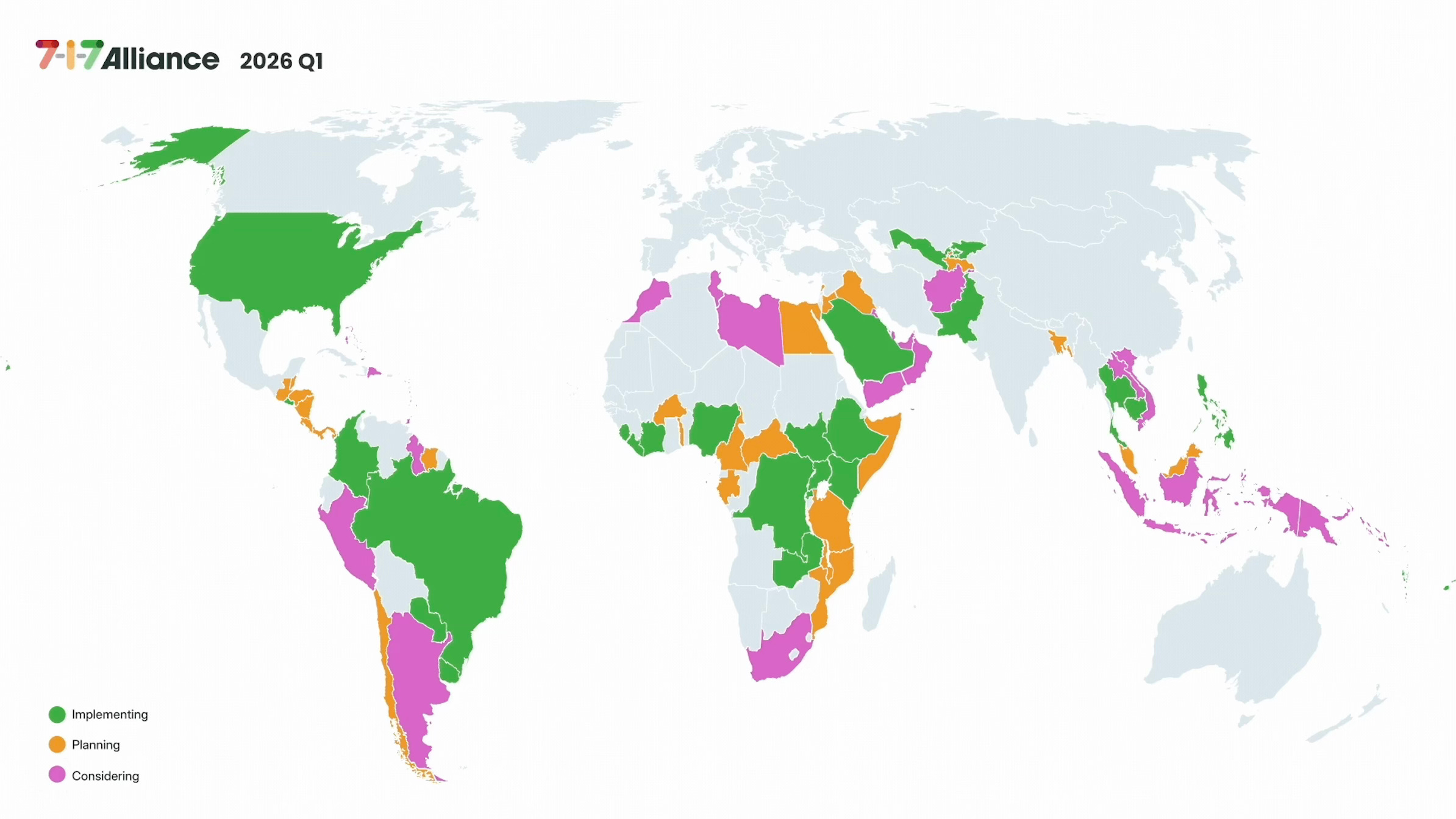
The 7-1-7 Alliance, which now includes 84 countries and is backed by the WHO and the World Bank’s Pandemic Fund, supports exactly this kind of progress, providing technical assistance and a global community of practice so countries have the support they need to use 7-1-7 effectively.
The bottom line
Another pandemic is a matter of when, not if. Climate change, urbanization, and the relentless evolution of microbes guarantee that new threats will emerge. We cannot stop every pathogen, but we can build systems that help communities and countries find threats early and act decisively.
The 7-1-7 target is ambitious but countries are proving that it’s achievable. The gap between what we know and what we do costs millions of lives. 7-1-7 helps close that gap.
